Reliable Sump Pump Installation for Elmhurst Homeowners Facing Wet Basements
Living in Elmhurst means dealing with Providence’s coastal climate and aging infrastructure that puts many basements at risk of flooding. Heavy rains combined with the area’s clay-heavy soil create perfect conditions for water to seep into your home’s lowest level. A properly installed sump pump system isn’t just a convenience—it’s your first line of defense against costly water damage and mold growth that can destroy your basement and threaten your family’s health.. Read more about What to Do if Your Federal Hill Water Heater Starts Leaking Everywhere.
Elmhurst sits in a low-lying area near Mashapaug Pond where the water table remains consistently high throughout the year. When nor’easters roll through or summer thunderstorms dump inches of rain in hours, that water has nowhere to go but into your basement if you don’t have adequate drainage protection. Our team understands these local conditions and installs sump pump systems specifically engineered for Providence’s unique challenges.. Read more about Expert French Drain and Basement Waterproofing Solutions in Mount Pleasant.
Call (401) 240-9711 today to schedule your inspection. We’ll evaluate your basement’s specific needs and recommend the right protection before the next storm hits.
Why Providence Homeowners Need a Reliable Sump Pump
Providence’s geography creates unique basement flooding risks that homeowners in other parts of Rhode Island don’t face. The city sits at the head of Narragansett Bay where tidal influences and storm surge can push groundwater levels higher than normal. During major storms, the combined sewer system in older neighborhoods like Elmhurst can back up, sending contaminated water into basements through floor drains and foundation cracks.
The soil composition in Providence adds another layer of complexity. Much of the area sits on glacial till—a mix of clay, silt, and rocks that drains poorly and holds water against your foundation. When this saturated soil freezes in winter, it expands and creates pressure that can crack basement walls and floors, creating new entry points for water.
According to the Rhode Island State Building Code SBC-3 (Plumbing), any basement with a floor below the surrounding grade must have proper drainage systems to prevent structural damage. This isn’t just a recommendation—it’s a code requirement that protects your investment and ensures your home remains safe and habitable during extreme weather events.
The EPA reports that even small amounts of basement moisture can lead to mold growth within 24-48 hours, creating health hazards and reducing your home’s value. A reliable sump pump system prevents this cycle before it starts.
Our Sump Pump Installation & Replacement Process
Every successful sump pump installation starts with understanding your basement’s unique characteristics. We begin with a comprehensive assessment that includes measuring the basement’s lowest point, checking for existing drainage patterns, and testing the soil’s moisture content. This diagnostic phase helps us determine the optimal location for your sump pit and discharge line.
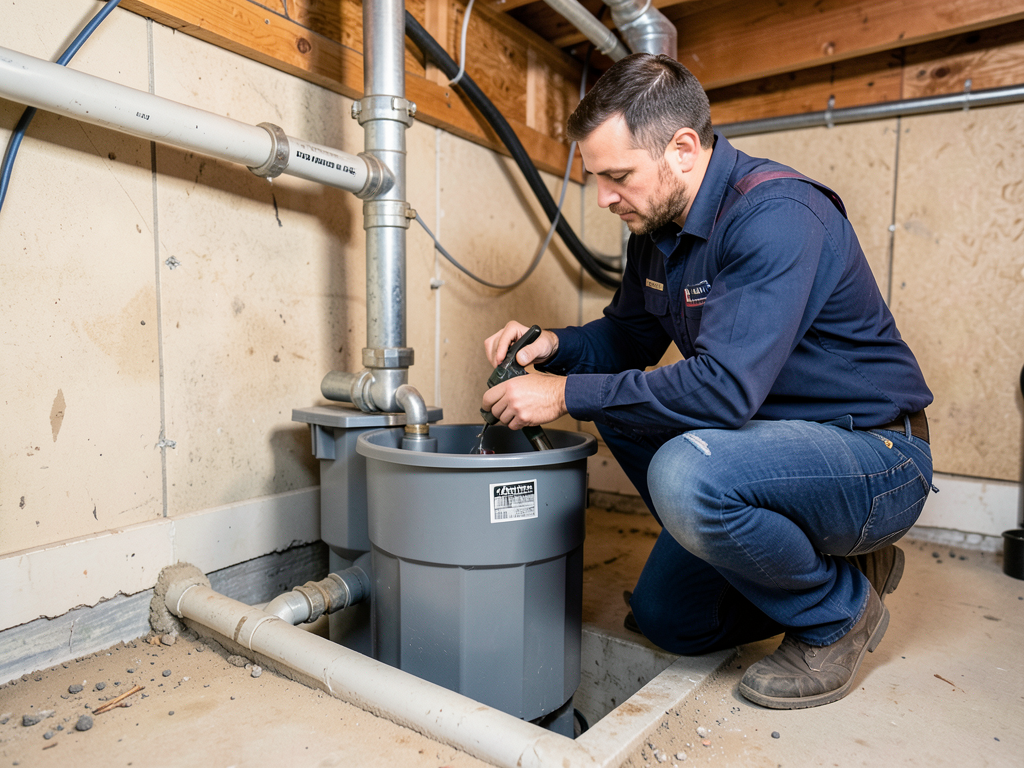
The installation process follows a proven sequence that ensures your system will perform when you need it most. First, we excavate the sump pit at the basement’s lowest point where water naturally collects. The pit must be deep enough to accommodate the pump and allow for proper water collection—typically 24 to 36 inches deep depending on your basement’s size and water table level.
Next, we install the pump basin with a perforated liner that prevents soil from clogging the system while allowing water to flow freely. The pump itself mounts inside this basin, either on a pedestal or as a submersible unit. We then connect the discharge pipe, making sure it exits your foundation at least 10 feet away from your home to prevent water from cycling back into the basement.
The final critical step involves electrical connections. All sump pumps require a dedicated GFCI-protected circuit to prevent shock hazards in wet conditions. We test the entire system by filling the pit with water and verifying that the float switch activates the pump at the correct level. Only after this complete testing do we consider the installation finished.
Call (401) 240-9711 to schedule your professional sump pump installation. Don’t wait until water is already in your basement.
Types of Sump Pumps We Install (Submersible vs. Pedestal)
Choosing between submersible and pedestal sump pumps depends on your basement’s specific conditions and your household’s needs. Submersible pumps sit entirely underwater in your sump pit, making them quieter and less obtrusive. They’re ideal for finished basements where noise matters and for areas with frequent flooding since they can handle higher volumes of water.
Pedestal pumps keep the motor above water level on a vertical shaft, making them easier to service and less expensive upfront. However, they’re noisier and can be tripped over in unfinished basements. For most Elmhurst homes, submersible pumps offer better long-term reliability since they’re less likely to overheat during extended operation.
Horsepower selection matters just as much as pump type. A 1/3 horsepower pump handles most residential applications, moving about 2,400 gallons per hour. But if your basement is large or you’re in a high-water table area, the 1/2 horsepower model moving 3,000 gallons per hour provides crucial extra capacity during heavy storms.
The check valve installation is another critical detail many homeowners overlook. This one-way valve prevents water in the discharge pipe from flowing back into the sump pit when the pump shuts off. Without it, your pump would cycle on and off constantly, wasting energy and shortening its lifespan.
Table: Sump Pump Comparison
| Pump Type | Best For | Noise Level | Lifespan | Cost Range |
|---|---|---|---|---|
| Submersible | Finished basements, high volume | Low | 7-10 years | $250-$600 |
| Pedestal | Unfinished basements, budget installs | High | 5-7 years | $100-$300 |
Battery Backup Systems: Protecting Your Basement During RI Storms
Rhode Island’s coastal location makes power outages a common occurrence during nor’easters and summer thunderstorms. When the electricity goes out, your primary sump pump becomes useless—exactly when you need it most. That’s why every reliable sump pump installation in Providence should include a battery backup system.
Battery backup systems consist of a secondary pump powered by a deep-cycle marine battery. This backup activates automatically when the primary pump fails or when water levels rise faster than the main pump can handle. During extended outages, the backup can run for 24-48 hours depending on how frequently it cycles.
The installation process for battery backups requires careful planning. The battery needs a cool, dry location near the sump pit but protected from moisture. We install a battery charger that keeps the system ready at all times, plus an alarm that alerts you when the backup activates or when battery power runs low.
Modern systems include smart features that send alerts to your phone when the backup engages or when maintenance is needed. This connectivity is especially valuable for Elmhurst homeowners who might be away during a storm and need to know their basement is protected.
FEMA recommends battery backup systems in areas prone to power outages, noting that water damage claims often exceed $10,000 for a single flooding event. The cost of a backup system is minimal compared to the potential damage it prevents.
Signs Your Providence Home Needs a New Sump Pump
Most sump pumps last 7-10 years, but several warning signs indicate your system might be failing before its time. Constant cycling—where the pump turns on and off rapidly—suggests a stuck float switch or a pump that’s too small for your needs. This behavior not only fails to protect your basement but also burns out the motor prematurely.
Strange noises during operation often signal bearing failure or debris in the impeller. A healthy pump should run quietly with just the sound of water moving through the discharge line. Grinding, rattling, or screeching noises mean internal components are wearing out and failure is imminent.
Visible rust or corrosion on the pump housing indicates age or exposure to contaminated water. In Providence’s older neighborhoods, sump pits sometimes contain sewage or chemical runoff that accelerates corrosion. If you see rust, the pump’s structural integrity is compromised and replacement should happen before complete failure.
Another critical sign is water visible in your basement after light rain when your pump should have handled it easily. This could mean the pump has lost capacity due to worn impellers or that your home’s water table has risen due to nearby construction or changing soil conditions.
During our diagnostic inspections, we use a multimeter to test the pump’s amp draw. A pump drawing significantly more current than its rated amperage is working too hard and will fail soon. This simple test can prevent the nightmare of a failed pump during a major storm.
Local Sump Pump Maintenance and Repair Services
Regular maintenance extends your sump pump’s life and ensures it works when you need it most. We recommend quarterly inspections that include cleaning the inlet screen, testing the float switch, and checking the discharge line for blockages. In Providence’s climate, debris from fall leaves and spring mud can quickly clog your system.
During maintenance visits, we also test the battery backup system, clean the check valve, and verify that the discharge line extends far enough from your foundation. Many homeowners don’t realize that a clogged or improperly positioned discharge line can cause water to cycle back into the basement, making the pump run continuously.
Repair services address specific failures rather than complete system replacement. Common repairs include replacing float switches that get stuck, clearing impeller blockages from debris, and repairing or replacing check valves that fail to prevent backflow. These targeted repairs cost significantly less than full replacement while restoring your system’s reliability.
For emergency situations, we offer 24/7 service throughout Providence County. When a storm is approaching or water is already entering your basement, quick response time matters. Our technicians arrive with fully stocked trucks, allowing us to handle most repairs in a single visit without delays for parts.. Read more about Finding a 24 Hour Emergency Plumber in Providence Without Overpaying.
We also provide maintenance agreements that include annual system inspections, priority scheduling for repairs, and discounts on parts and labor. These agreements give Elmhurst homeowners peace of mind knowing their basement protection system receives professional attention before problems develop.
Frequently Asked Questions
Do I need a permit for sump pump installation in Providence?
Yes. The City of Providence requires plumbing permits for all sump pump installations. This ensures compliance with Rhode Island plumbing codes and proper discharge methods that protect both your property and the municipal sewer system.
How long does sump pump installation take?
Most residential installations take 4-6 hours from start to finish. Complex installations involving battery backups or major plumbing modifications may require a full day. We always test the system thoroughly before considering the job complete.
Can I install a sump pump myself?
While DIY installation is possible, professional installation ensures code compliance, proper sizing, and reliable operation. Mistakes in electrical connections or discharge line placement can create safety hazards or system failures that cost more to fix than professional installation would have cost.
What’s the difference between a sump pump and a sewage ejector pump?
Sump pumps handle groundwater and clear water from basement flooding. Sewage ejector pumps handle waste from below-grade bathrooms and must meet different code requirements. Using the wrong type can create health hazards and code violations.
How much does sump pump installation cost in Providence?
Installation costs vary based on basement conditions, pump type, and whether battery backup is included. Basic installations start around $800 while comprehensive systems with battery backup typically range from $1,500 to $2,500. We provide detailed quotes after evaluating your specific needs.
Ready to protect your Elmhurst basement? Call (401) 240-9711 now to schedule your professional sump pump installation. Don’t wait for the next big storm to discover your system isn’t ready.
{
“@context”: “https://schema.org”,
“@type”: “BlogPosting”,
“headline”: “Reliable Sump Pump Installation for Elmhurst Homeowners Facing Wet Basements”,
“description”: “Protect your Elmhurst basement from flooding with professional sump pump installation. Serving Providence 02909 with 24/7 emergency service and Rhode Island code compliance.”,
“wordCount”: 1909,
“datePublished”: “2026-02-14T13:41:00.000Z”,
“dateModified”: “2026-02-14T13:41:00.000Z”,
“inLanguage”: “en-US”,
“mainEntityOfPage”: {
“@type”: “WebPage”,
“@id”: “https://cornerstoneplumbingprovidence.com”
},
“publisher”: {
“@type”: “LocalBusiness”,
“name”: “Cornerstone Plumbing Providence”,
“url”: “https://cornerstoneplumbingprovidence.com”
},
“author”: {
“@type”: “Organization”,
“name”: “Cornerstone Plumbing Providence”,
“url”: “https://cornerstoneplumbingprovidence.com”
},
“image”: {
“@type”: “ImageObject”,
“url”: “https://cornerstoneplumbingprovidence.com/wp-content/uploads/2026/03/reliable-sump-pump-installation-for-elmhurst-homeo-1.png”
}
}
{
“@context”: “https://schema.org”,
“@type”: “Plumber”,
“name”: “Cornerstone Plumbing Providence”,
“url”: “https://cornerstoneplumbingprovidence.com”,
“address”: {
“@type”: “PostalAddress”,
“addressLocality”: “Providence”
},
“areaServed”: {
“@type”: “City”,
“name”: “Providence”
}
}
{
“@context”: “https://schema.org”,
“@type”: “FAQPage”,
“mainEntity”: [
{
“@type”: “Question”,
“name”: “Do I need a permit for sump pump installation in Providence?”,
“acceptedAnswer”: {
“@type”: “Answer”,
“text”: “Yes. The City of Providence requires plumbing permits for all sump pump installations. This ensures compliance with Rhode Island plumbing codes and proper discharge methods that protect both your property and the municipal sewer system.”
}
},
{
“@type”: “Question”,
“name”: “How long does sump pump installation take?”,
“acceptedAnswer”: {
“@type”: “Answer”,
“text”: “Most residential installations take 4-6 hours from start to finish. Complex installations involving battery backups or major plumbing modifications may require a full day. We always test the system thoroughly before considering the job complete.”
}
},
{
“@type”: “Question”,
“name”: “Can I install a sump pump myself?”,
“acceptedAnswer”: {
“@type”: “Answer”,
“text”: “While DIY installation is possible, professional installation ensures code compliance, proper sizing, and reliable operation. Mistakes in electrical connections or discharge line placement can create safety hazards or system failures that cost more to fix than professional installation would have cost.”
}
},
{
“@type”: “Question”,
“name”: “What’s the difference between a sump pump and a sewage ejector pump?”,
“acceptedAnswer”: {
“@type”: “Answer”,
“text”: “Sump pumps handle groundwater and clear water from basement flooding. Sewage ejector pumps handle waste from below-grade bathrooms and must meet different code requirements. Using the wrong type can create health hazards and code violations.”
}
},
{
“@type”: “Question”,
“name”: “How much does sump pump installation cost in Providence?”,
“acceptedAnswer”: {
“@type”: “Answer”,
“text”: “Installation costs vary based on basement conditions, pump type, and whether battery backup is included. Basic installations start around $800 while comprehensive systems with battery backup typically range from $1,500 to $2,500. We provide detailed quotes after evaluating your specific needs.”
}
}
]
}
{
“@context”: “https://schema.org”,
“@type”: “BreadcrumbList”,
“itemListElement”: [
{
“@type”: “ListItem”,
“position”: 1,
“name”: “Home”,
“item”: “https://cornerstoneplumbingprovidence.com”
},
{
“@type”: “ListItem”,
“position”: 2,
“name”: “Blog”,
“item”: “https://cornerstoneplumbingprovidence.com/blog”
},
{
“@type”: “ListItem”,
“position”: 3,
“name”: “Reliable Sump Pump Installation for Elmhurst Homeowners Facing Wet Basements”
}
]
}
{
“@context”: “https://schema.org”,
“@type”: “Service”,
“serviceType”: “Plumbing”,
“provider”: {
“@type”: “LocalBusiness”,
“name”: “Cornerstone Plumbing Providence”,
“url”: “https://cornerstoneplumbingprovidence.com”
},
“areaServed”: {
“@type”: “City”,
“name”: “Providence”
},
“description”: “Protect your Elmhurst basement from flooding with professional sump pump installation. Serving Providence 02909 with 24/7 emergency service and Rhode Island code compliance.”
}