
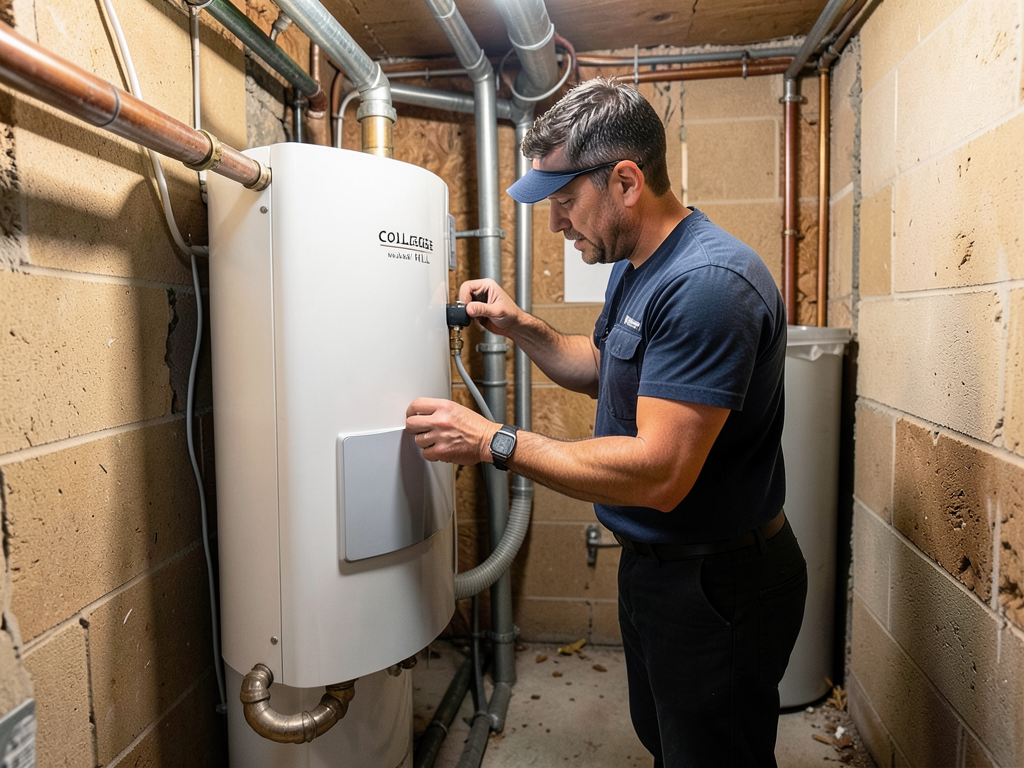
Switching to Tankless Water Heaters in Historic College Hill Houses
Homeowners in Providence’s College Hill neighborhood face unique challenges when it comes to water heating. The historic homes built in the late 1800s and early 1900s often have cramped basements where traditional 40- to 50-gallon water heaters dominate valuable floor space. These older homes also experience significant heat loss through aging pipes and poorly insulated walls, making energy efficiency a priority for modern residents. Providence Historic District Commission.
Tankless water heaters offer a compelling solution for College Hill residents who want to reclaim basement space while reducing monthly utility costs. These on-demand systems heat water only when needed, eliminating the standby energy loss of traditional tanks. For homes near Brown University and the historic Benefit Street corridor, switching to tankless means preserving architectural integrity while meeting 21st-century efficiency standards. What to Do if Your Federal Hill Water Heater Starts Leaking Everywhere.
Why College Hill Homes Need Tankless Solutions
College Hill’s historic district contains some of Providence’s oldest residential architecture, with homes dating back to the Federal and Victorian eras. These structures typically feature narrow, multi-story layouts where every square foot counts. Traditional water heaters require substantial floor space and often need dedicated closets or utility rooms that many College Hill homes simply cannot spare. Water Heater Repair & Installation.
The neighborhood’s proximity to Narragansett Bay creates specific water heating challenges. The local groundwater temperature averages 48-52°F year-round, meaning water heaters must work harder during Rhode Island’s cold winters to achieve comfortable shower temperatures. Tankless systems excel in this environment because they provide continuous hot water without the recovery time limitations of tank models. Rhode Island Energy rebates.
Many College Hill homes still use original plumbing from the early 20th century. These systems often have galvanized steel pipes that restrict water flow and reduce efficiency. Tankless water heaters require proper flow rates to function optimally, making a professional assessment essential before installation. Reliable Sump Pump Installation for Elmhurst Homeowners Facing Wet Basements.
Tankless vs. Traditional Water Heaters: College Hill Comparison
| Feature | Traditional Tank | Tankless System |
|---|---|---|
| Space Required | 24-30 inches wide, 60+ inches tall | 18-24 inches wide, 28-32 inches tall |
| Energy Efficiency | 60-70% (standby loss) | 85-98% (on-demand) |
| Lifespan | 8-12 years | 20+ years with maintenance |
| Hot Water Capacity | 40-50 gallons (limited) | Unlimited (continuous) |
| Installation Complexity | Standard venting, simple hookups | May require gas line upgrades, new venting |
For College Hill residents, the space savings alone often justify the switch. A tankless unit can free up 15-20 square feet of basement space – valuable real estate in homes where storage is already limited. The energy savings typically range from 24-34% annually for homes using less than 41 gallons of hot water daily.. Read more about The Best High End Water Filtration Systems for Blackstone Boulevard Homes.
Expert Sizing and Selection for College Hill Homes
Proper sizing is critical for tankless water heater performance. The system must deliver enough hot water to handle simultaneous demands – running a shower while someone washes dishes, for example. Professional plumbers calculate the required gallons per minute (GPM) based on the number of fixtures and their typical usage patterns. Professional Drain Cleaning Services for Historic Homes on the East Side.
College Hill’s older homes often have multiple bathrooms spread across different floors. A typical three-bedroom home might need a system capable of delivering 6-8 GPM to handle peak demand. Homes with luxury fixtures like rain showerheads or jetted tubs may require even higher flow rates.
The cold groundwater temperatures in Providence mean tankless units must have higher BTU ratings than units installed in warmer climates. A standard 150,000 BTU unit might struggle during winter months, while a 199,000 BTU model provides more reliable performance year-round. Professional assessment includes checking existing gas lines – many older College Hill homes have ½-inch gas lines that need upgrading to ¾-inch to support high-efficiency tankless systems.. Read more about Dealing with Hard Water in Fox Point Using a Professional Softening System.
Providence-Specific Installation Considerations
Installing tankless water heaters in College Hill requires navigating both building codes and historic preservation guidelines. The Rhode Island State Building Code (SBC-3, Section 1301.2) mandates specific venting requirements for gas-fired water heaters. Tankless units typically require Category III stainless steel venting, which must terminate at least 3 feet from any operable window or door.
Historic district regulations in College Hill mean exterior modifications need careful consideration. Vent pipes cannot alter the home’s historic facade, often requiring creative routing through existing chases or utility closets. The Providence Historic District Commission reviews all exterior modifications, so working with contractors familiar with these requirements is essential.. Read more about Upgrading Old Lead or Galvanized Pipes in Elmwood Properties.
Many College Hill homes have aging electrical systems that cannot support the electrical requirements of modern tankless units. These systems often need dedicated 120V or 240V circuits with proper grounding. The Rhode Island Department of Labor and Training (RIDLT) requires permits for all water heater installations, with inspections verifying compliance with current codes. Who to Call for Safe Gas Line Installation in the West End.
Water quality in Providence affects tankless performance. The city’s water supply from the Scituate Reservoir has moderate hardness levels around 60-80 mg/L. While not as problematic as well water in other regions, this hardness still causes scale buildup in tankless heat exchangers over time. Professional installation includes descaling port access and recommendations for water treatment if needed.
Rhode Island Energy Rebates and Financing Options
Rhode Island Energy (formerly National Grid) offers rebates for high-efficiency water heating equipment. Current programs provide up to $300 for ENERGY STAR certified tankless water heaters with thermal efficiency ratings of 0.87 or higher. These rebates require professional installation and documentation of the old unit’s removal.
The Rhode Island Office of Energy Resources administers additional incentives through the Residential Energy Tax Credit program. Homeowners can receive tax credits covering 25% of qualified energy efficiency improvements, up to $500 annually. Tankless water heater installations typically qualify if they meet specific efficiency thresholds.
Federal tax credits under the Inflation Reduction Act extend through 2032 for qualifying high-efficiency equipment. Tankless water heaters meeting ENERGY STAR criteria qualify for a 30% tax credit on equipment and installation costs, up to $1,200 per year. These credits apply to both gas and electric models.
Many College Hill homeowners qualify for 0% financing through Rhode Island Housing’s energy efficiency loan program. These loans cover the full cost of qualified improvements with terms up to 10 years, making tankless upgrades more accessible for historic home preservation.
Installation Process and Timeline
Professional tankless water heater installation typically requires 6-8 hours for a straightforward replacement. The process begins with a comprehensive home assessment, including water quality testing, gas line evaluation, and existing plumbing inspection. This diagnostic phase identifies potential challenges before work begins.. Read more about Should You Repair or Replace Your Aging Water Heater in Mount Hope?.
Installation steps include removing the old unit, upgrading gas lines if necessary, mounting the new tankless system, installing proper venting, connecting water lines, and configuring the digital control panel. Professional plumbers test the system at multiple flow rates to verify performance meets manufacturer specifications.. Read more about Choosing the Best Licensed Plumber for Your Providence Home Remodel.
Most College Hill installations require permits from the City of Providence Building Department. The process typically takes 3-5 business days for review. Inspections occur after installation, with final approval required before the system can operate. Working with licensed contractors familiar with local requirements prevents costly delays.
Post-installation includes homeowner training on the digital controls, maintenance schedule establishment, and documentation for rebate applications. Many contractors provide a 5-10 year warranty on parts and labor, significantly longer than the typical 6-year warranty on traditional tanks.
Maintenance Requirements for Tankless Systems
Tankless water heaters require annual maintenance to maintain efficiency and prevent premature failure. The primary maintenance task is descaling the heat exchanger to remove mineral buildup. In Providence’s water conditions, this typically needs completion every 12-18 months.
Professional maintenance includes checking gas pressure, inspecting venting for blockages, testing safety controls, and cleaning the inlet filter screen. These tasks prevent the most common tankless failures – heat exchanger damage from scale buildup and combustion issues from dirty burners.
Homeowners can perform basic maintenance like cleaning the air intake filter and checking for error codes on the digital display. Most modern units provide diagnostic codes that identify specific issues, allowing for quicker professional service when needed.
Water quality testing helps determine maintenance frequency. Homes with water softeners may extend service intervals, while those with harder water might need more frequent attention. Professional plumbers can test water hardness and recommend appropriate treatment systems to protect the investment.
Cost Considerations and ROI Analysis
Switching to tankless involves higher upfront costs but provides significant long-term savings. A typical installation in College Hill ranges from $3,500 to $5,500, including equipment, labor, permits, and any necessary gas line upgrades. This compares to $1,200 to $2,000 for traditional tank replacement.
The higher initial investment is offset by several factors. Energy savings of 24-34% translate to $100-150 annually for typical households. The longer lifespan – 20+ years versus 8-12 years – means fewer replacements over the home’s life. Space savings can also add value in tight College Hill basements.
Payback periods typically range from 5-7 years, depending on usage patterns and local utility rates. For homes with high hot water demand or those planning to stay 10+ years, the investment often makes financial sense. The added benefit of continuous hot water eliminates the frustration of running out during morning showers.
Professional assessment provides accurate cost estimates based on specific home conditions. Factors like the need for electrical upgrades, complex venting routes, or water treatment systems can affect the final price. Reputable contractors provide detailed proposals outlining all costs and potential energy savings.
Choosing the Right Contractor in Providence
Selecting a qualified contractor is crucial for successful tankless installation. Look for Rhode Island State Plumbing License holders with specific tankless certification from manufacturers like Navien, Rinnai, or Rheem. These certifications ensure proper training on the latest technology and installation techniques.
Experience with historic homes is particularly valuable in College Hill. Contractors familiar with the neighborhood understand the unique challenges of working in older structures – from plaster walls that require careful cutting to original wood framing that needs reinforcement for new equipment.
Ask potential contractors about their experience with Providence’s specific requirements. They should be familiar with the Historic District Commission guidelines, local permitting processes, and the Rhode Island State Building Code. Request references from other College Hill homeowners who have completed similar projects.
Professional contractors provide detailed proposals including equipment specifications, installation timeline, permit requirements, and warranty information. They should also explain the maintenance requirements and provide documentation for any available rebates or tax credits.
Frequently Asked Questions
How long does a tankless water heater last compared to a traditional tank?
Tankless water heaters typically last 20+ years with proper maintenance, while traditional tanks generally need replacement every 8-12 years. This extended lifespan often offsets the higher initial cost of tankless systems.
Will a tankless system provide enough hot water for my family?
Properly sized tankless units provide continuous hot water for simultaneous use. A typical three-bedroom home needs 6-8 GPM capacity. Professional assessment determines the right size based on your specific usage patterns and fixture types.
Do tankless water heaters work during power outages?
Gas-fired tankless units still require electricity for the control panel and ignition system. They will not function during power outages unless connected to a backup power supply. This differs from traditional tanks that can provide limited hot water from the stored supply.
How much can I save on utility bills with a tankless system?
Energy savings typically range from 24-34% annually for homes using less than 41 gallons of hot water daily. Actual savings depend on usage patterns, local utility rates, and the efficiency of your old system.
Are tankless water heaters worth the investment for historic homes?
For many College Hill homeowners, the space savings, energy efficiency, and continuous hot water make tankless systems worthwhile. The investment often pays for itself through energy savings and the extended lifespan compared to traditional tanks.
Making the Switch: Next Steps
Ready to upgrade your College Hill home with a tankless water heater? The first step is scheduling a professional assessment to evaluate your specific needs. This evaluation examines your existing system, gas lines, electrical capacity, and water quality to determine the optimal solution.
Professional assessment typically takes 1-2 hours and includes a detailed proposal with equipment recommendations, installation timeline, and cost estimates. The proposal should also outline any necessary upgrades to gas lines or electrical systems and identify potential rebate opportunities.
Once you approve the proposal, permit applications go to the City of Providence. Most installations can begin within 2-3 weeks of approval. The actual installation process takes 6-8 hours for most homes, with additional time for inspections and final approval.
Don’t wait until your current water heater fails. Planning your upgrade during warmer months means avoiding the rush when winter emergencies hit. Plus, you’ll have time to research rebates and financing options that can make the investment more affordable.
Call (401) 240-9711 today to schedule your tankless water heater assessment. Our licensed plumbers have extensive experience with College Hill’s historic homes and understand the specific requirements for successful installation in Providence’s East Side neighborhood.
Ready to reclaim your basement space and enjoy endless hot water? Pick up the phone and call (401) 240-9711 before the next cold snap hits. Our team provides fast, professional service with all necessary permits and inspections included.
{
“@context”: “https://schema.org”,
“@type”: “BlogPosting”,
“headline”: “Switching to Tankless Water Heaters in Historic College Hill Houses”,
“description”: “Learn why tankless water heaters are ideal for College Hill’s historic homes. Discover space-saving benefits, energy efficiency, and expert installation for Providence’s East Side.”,
“wordCount”: 2203,
“datePublished”: “2026-02-20T09:23:00.000Z”,
“dateModified”: “2026-02-20T09:23:00.000Z”,
“inLanguage”: “en-US”,
“mainEntityOfPage”: {
“@type”: “WebPage”,
“@id”: “https://cornerstoneplumbingprovidence.com”
},
“publisher”: {
“@type”: “LocalBusiness”,
“name”: “Cornerstone Plumbing Providence”,
“url”: “https://cornerstoneplumbingprovidence.com”
},
“author”: {
“@type”: “Organization”,
“name”: “Cornerstone Plumbing Providence”,
“url”: “https://cornerstoneplumbingprovidence.com”
},
“image”: {
“@type”: “ImageObject”,
“url”: “https://cornerstoneplumbingprovidence.com/wp-content/uploads/2026/03/switching-to-tankless-water-heaters-in-historic-co-1.png”
}
}
{
“@context”: “https://schema.org”,
“@type”: “Plumber”,
“name”: “Cornerstone Plumbing Providence”,
“url”: “https://cornerstoneplumbingprovidence.com”,
“address”: {
“@type”: “PostalAddress”,
“addressLocality”: “Providence”
},
“areaServed”: {
“@type”: “City”,
“name”: “Providence”
}
}
{
“@context”: “https://schema.org”,
“@type”: “FAQPage”,
“mainEntity”: [
{
“@type”: “Question”,
“name”: “How long does a tankless water heater last compared to a traditional tank?”,
“acceptedAnswer”: {
“@type”: “Answer”,
“text”: “Tankless water heaters typically last 20+ years with proper maintenance, while traditional tanks generally need replacement every 8-12 years. This extended lifespan often offsets the higher initial cost of tankless systems.”
}
},
{
“@type”: “Question”,
“name”: “Will a tankless system provide enough hot water for my family?”,
“acceptedAnswer”: {
“@type”: “Answer”,
“text”: “Properly sized tankless units provide continuous hot water for simultaneous use. A typical three-bedroom home needs 6-8 GPM capacity. Professional assessment determines the right size based on your specific usage patterns and fixture types.”
}
},
{
“@type”: “Question”,
“name”: “Do tankless water heaters work during power outages?”,
“acceptedAnswer”: {
“@type”: “Answer”,
“text”: “Gas-fired tankless units still require electricity for the control panel and ignition system. They will not function during power outages unless connected to a backup power supply. This differs from traditional tanks that can provide limited hot water from the stored supply.”
}
},
{
“@type”: “Question”,
“name”: “How much can I save on utility bills with a tankless system?”,
“acceptedAnswer”: {
“@type”: “Answer”,
“text”: “Energy savings typically range from 24-34% annually for homes using less than 41 gallons of hot water daily. Actual savings depend on usage patterns, local utility rates, and the efficiency of your old system.”
}
},
{
“@type”: “Question”,
“name”: “Are tankless water heaters worth the investment for historic homes?”,
“acceptedAnswer”: {
“@type”: “Answer”,
“text”: “For many College Hill homeowners, the space savings, energy efficiency, and continuous hot water make tankless systems worthwhile. The investment often pays for itself through energy savings and the extended lifespan compared to traditional tanks.”
}
}
]
}
{
“@context”: “https://schema.org”,
“@type”: “BreadcrumbList”,
“itemListElement”: [
{
“@type”: “ListItem”,
“position”: 1,
“name”: “Home”,
“item”: “https://cornerstoneplumbingprovidence.com”
},
{
“@type”: “ListItem”,
“position”: 2,
“name”: “Blog”,
“item”: “https://cornerstoneplumbingprovidence.com/blog”
},
{
“@type”: “ListItem”,
“position”: 3,
“name”: “Switching to Tankless Water Heaters in Historic College Hill Houses”
}
]
}
{
“@context”: “https://schema.org”,
“@type”: “Service”,
“serviceType”: “Plumbing”,
“provider”: {
“@type”: “LocalBusiness”,
“name”: “Cornerstone Plumbing Providence”,
“url”: “https://cornerstoneplumbingprovidence.com”
},
“areaServed”: {
“@type”: “City”,
“name”: “Providence”
},
“description”: “Learn why tankless water heaters are ideal for College Hill’s historic homes. Discover space-saving benefits, energy efficiency, and expert installation for Providence’s East Side.”
}