Is Your Smith Hill Basement Ready for a Full Bathroom Addition?
Adding a full bathroom to your Smith Hill basement is an exciting home improvement project that can add significant value to your Providence home. However, basement bathrooms come with unique plumbing challenges that many homeowners discover only after breaking ground. Before you start tearing up concrete or buying fixtures, you need to understand the specific requirements for basement plumbing in Providence’s historic Smith Hill neighborhood. How to Get Fast Pipe Repair in Smith Hill Before the Next Big Freeze.
The good news is that with proper planning and the right expertise, most Smith Hill basements can accommodate a full bathroom. The key is understanding your home’s existing plumbing system, local building codes, and the specific solutions available for below-grade installations. Let’s walk through what you need to know before starting your basement bathroom project. Reliable Sump Pump Installation for Elmhurst Homeowners Facing Wet Basements.
Understanding Smith Hill Basement Plumbing Challenges
Smith Hill’s historic homes, many built between 1890 and 1930, present unique plumbing challenges for basement bathroom additions. These homes typically feature granite or fieldstone foundations with concrete floors poured directly on compacted soil. The neighborhood sits on slightly elevated ground near the Rhode Island State House, but many basements still face moisture issues due to Providence’s high water table and clay-heavy soil composition. What to Do if Your Federal Hill Water Heater Starts Leaking Everywhere.
The primary challenge is that basement bathrooms require special drainage solutions since waste water cannot flow downhill to the main sewer line. Most Smith Hill homes have main sewer connections located 6 to 8 feet above basement floor level. This means you’ll need either an upflushing system or significant concrete modification to create proper drainage slopes. Professional Drain Cleaning Services for Historic Homes on the East Side.
Another consideration is the age of existing plumbing. Many Smith Hill homes still have original cast iron drain lines that may be corroded or partially collapsed. Before any bathroom addition, a professional inspection using video camera technology can identify potential issues with your main sewer line that could complicate your project.. Read more about Why Your Smith Hill Basement Ejector Pump is Making That Weird Noise (And How to Fix It).
Moisture control is critical in basement environments. Smith Hill experiences an average annual rainfall of 48 inches, and the area’s clay soil retains moisture, creating hydrostatic pressure against foundation walls. Any basement bathroom installation must include proper waterproofing and vapor barriers to prevent mold growth and structural damage. Who to Call for Safe Gas Line Installation in the West End.
Upflushing vs. Gravity Drain Systems for Basement Bathrooms
When adding a bathroom below the main sewer line, you have two primary options: upflushing systems or gravity drain systems. Each has distinct advantages depending on your basement layout and budget.. Read more about Why You Should Get a Sewer Camera Inspection Before Buying an Elmwood Fixer Upper.
Upflushing systems, commonly known as macerating toilets or Saniflo systems, grind waste and pump it upward to the main drain line. These systems can be installed without breaking concrete and typically cost between $1,500 and $3,000 for the unit plus installation. The macerator pump sits in a compact tank behind the toilet and can also handle gray water from a nearby sink or shower.. Read more about Does a Tankless Water Heater Really Save Money in a Washington Park Single Family Home?.
The main advantage of upflushing systems is minimal demolition. You can install a complete bathroom without jackhammering your basement floor. However, these systems have limitations. They require electricity to operate, can be noisy during pumping cycles, and may not handle heavy usage as well as traditional plumbing. City of Providence Building Permits.
Gravity drain systems use a sewage ejector pump to move waste uphill to the main sewer connection. These systems require breaking through the basement floor to install a sump basin, typically 18 to 24 inches in diameter and 24 to 30 inches deep. The basin collects waste from the toilet, sink, and shower, then pumps it up through a discharge line when it reaches a certain level.
Ejector pump systems cost more upfront, usually $3,000 to $5,000 installed, but they handle higher volumes and are more reliable for primary bathrooms. The discharge line must be properly vented and include a check valve to prevent backflow. In Smith Hill’s older homes, you may also need to install a backwater valve to protect against sewer line backups, which are common in Providence’s combined sewer system during heavy rainfall.
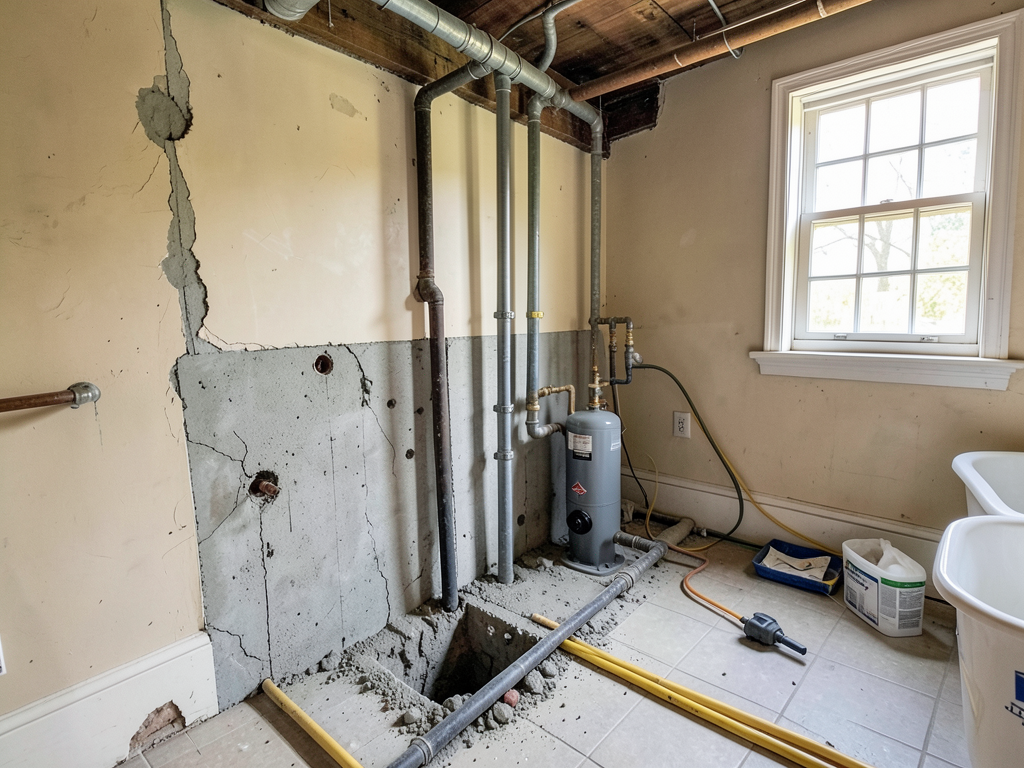
– Diagram comparing upflushing macerating toilet system versus gravity ejector pump system for basement installations, showing component locations and waste flow paths.
Providence Building Permits and Plumbing Codes
Before starting any basement bathroom project in Smith Hill, you must obtain the proper permits from the City of Providence Department of Inspections and Standards. Rhode Island follows the International Plumbing Code with state-specific amendments, and Providence has additional local requirements for basement installations. EPA Sewage System Guidelines.
A full bathroom addition requires a plumbing permit, which costs approximately $150 to $250 depending on the scope of work. The permit application must include detailed plumbing plans showing fixture locations, drainage routes, and ventilation systems. You’ll need to submit these plans to the Providence Building Department at least two weeks before starting work.
Key code requirements for basement bathrooms include:
- Minimum 2-inch diameter vent pipe for each fixture
- Backwater valve installation on the main sewer line if the basement is below street level
- Proper GFCI protection for all electrical outlets in bathroom areas
- Ventilation requirements: minimum 50 cubic feet per minute exhaust fan for bathrooms under 100 square feet
- Moisture-resistant materials for walls and flooring in basement environments
The Rhode Island State Plumbing Code requires that all sewage ejector pumps include an alarm system that alerts homeowners if the pump fails or the basin overflows. This is particularly important in Smith Hill, where power outages during winter storms can leave ejector pumps inoperable.
Inspections are required at multiple stages: after rough-in plumbing installation, before pouring concrete for slab work, and for the final inspection after all fixtures are installed. The Providence inspection process typically takes 3 to 5 business days for scheduling, so factor this timeline into your project planning.
Estimated Costs for Providence Basement Bathroom Projects
Basement bathroom costs in Smith Hill vary significantly based on your chosen system and the condition of your existing plumbing. Here’s what Providence homeowners typically invest in these projects:
| Component | Upflushing System | Gravity Ejector System |
|---|---|---|
| Macerating Toilet Unit | $1,200 – $2,500 | Not required |
| Sewage Ejector Pump | Not required | $800 – $1,500 |
| Permit Fees | $150 – $250 | $150 – $250 |
| Demolition/Concrete Work | $0 – $500 | $1,500 – $3,000 |
| Fixtures (toilet, sink, shower) | $800 – $2,500 | $800 – $2,500 |
| Plumbing Labor | $1,500 – $3,000 | $2,500 – $4,000 |
| Total Estimated Cost | $4,450 – $8,750 | $6,900 – $11,500 |
Additional costs to consider include waterproofing the basement walls ($3 to $7 per square foot), installing a dedicated electrical circuit for the ejector pump ($300 to $500), and potential structural repairs if your foundation requires reinforcement.
Smith Hill homeowners should also budget for unexpected issues common in historic homes. During concrete removal, you might discover deteriorated drain lines, abandoned pipes, or structural concerns that need addressing. A contingency fund of 15 to 20 percent of your total budget is wise for these older properties.
The return on investment for basement bathrooms in Providence averages 60 to 70 percent, with higher returns in neighborhoods like Smith Hill where additional bathrooms are highly valued due to the area’s historic housing stock.
Our Process: From Trenching to Inspection
Adding a basement bathroom requires careful planning and execution. Here’s what you can expect during a typical basement bathroom installation in Smith Hill:
- Initial Assessment and Planning
We evaluate your basement layout, existing plumbing, and structural conditions. This includes camera inspection of your main sewer line and moisture testing of basement walls.
- Permit Acquisition
We handle all permit applications with the City of Providence, ensuring your plans meet local code requirements before work begins.
- System Selection and Design
Based on your budget and usage needs, we recommend either an upflushing or ejector pump system and create detailed installation plans.
- Demolition and Preparation
For ejector systems, we carefully break through the concrete floor, remove soil to proper depth, and prepare the sump basin area.
- Plumbing Rough-in
We install all drain lines, vent pipes, and water supply lines according to code. For ejector systems, we set the pump basin and connect it to the main sewer line.
- Electrical and Ventilation
We install dedicated circuits for pumps, GFCI outlets, and bathroom exhaust fans with proper ducting to the exterior.
- Fixture Installation
We set the toilet, sink, and shower, connecting all fixtures to the new plumbing system.
- Inspection and Testing
We schedule required inspections and thoroughly test all systems, checking for leaks and proper pump operation.
- Final Finishes
We coordinate with your finishing contractor for wall installation, flooring, and final fixture connections.
The entire process typically takes 2 to 3 weeks from start to finish, though permit acquisition can add 2 to 4 weeks to the timeline. Weather can affect excavation work, particularly during Providence’s wet spring months.
During installation, we take precautions to protect your home from dust and debris. We use plastic sheeting to contain dust, wear protective footwear, and clean work areas daily. Our team understands the importance of respecting your home and completing work efficiently.
– Photo sequence showing basement bathroom installation progress: initial assessment, concrete removal, plumbing rough-in, pump installation, and final fixture setup.
Moisture Control and Ventilation Requirements
Basement bathrooms in Smith Hill require special attention to moisture control due to the area’s high humidity levels and the inherent moisture problems in below-grade spaces. Proper ventilation and waterproofing are essential for preventing mold growth and protecting your investment.
Rhode Island’s climate creates ideal conditions for mold growth, with summer humidity often exceeding 80 percent. Basement bathrooms need exhaust fans rated for continuous operation, typically 50 to 80 cubic feet per minute depending on bathroom size. The fan should vent directly to the exterior, not into the attic or crawl space, and include a humidistat that activates automatically when moisture levels rise.
Waterproofing starts with addressing any existing moisture issues. This might include sealing foundation cracks, installing a vapor barrier on walls, and ensuring proper grading around your home’s exterior to direct water away from the foundation. In Smith Hill’s older homes, we often find that previous waterproofing efforts have failed, requiring more comprehensive solutions.
For basement bathroom floors, we recommend materials that can withstand moisture exposure. Porcelain tile with a water absorption rate of less than 0.5 percent is ideal. The tile should be installed over a waterproof membrane that extends up the walls at least 6 inches. Grout should be epoxy-based rather than cement-based for superior moisture resistance.
Wall construction in basement bathrooms should include mold-resistant drywall or cement board, especially in shower areas. We install a vapor barrier between the studs and the exterior wall to prevent condensation from forming on cold foundation surfaces. The barrier should be continuous and properly sealed at all seams and penetrations.
Temperature control is another consideration. Basement bathrooms tend to feel cold due to their location and proximity to cold foundation walls. We recommend installing radiant floor heating or ensuring your existing HVAC system can adequately heat the space. Proper insulation in exterior walls helps maintain comfortable temperatures and reduces condensation risk.
Common Smith Hill Basement Bathroom Problems and Solutions
Based on our experience with Smith Hill homes, several issues commonly arise during basement bathroom projects. Understanding these challenges helps you prepare and avoid costly mistakes.
High Water Table Issues: Smith Hill’s proximity to the Providence River and the area’s clay soil can create high water table conditions. This affects ejector pump systems by increasing the frequency of pump cycles and potentially causing premature failure. We solve this by installing larger capacity pumps and ensuring proper drainage around the foundation.
Foundation Wall Penetrations: Running new plumbing through granite or fieldstone foundation walls requires careful drilling to avoid structural damage. We use diamond-tipped core bits and seal all penetrations with hydraulic cement and waterproofing compounds to maintain the wall’s integrity.
Limited Headroom: Many Smith Hill basements have ceiling heights of only 7 to 7.5 feet, making standard bathroom fixtures challenging to install. We often recommend wall-mounted toilets and compact fixtures to maximize headroom while maintaining functionality.
Electrical Code Compliance: Providence requires GFCI protection for all bathroom outlets and proper grounding for all circuits. In older homes with ungrounded wiring, we may need to run new circuits from the main panel, which can add to project costs.
Sewer Line Access: Some Smith Hill homes have main sewer lines located in difficult-to-access areas, requiring creative routing solutions. We use directional drilling techniques when possible to minimize floor demolition while ensuring proper drainage slopes.
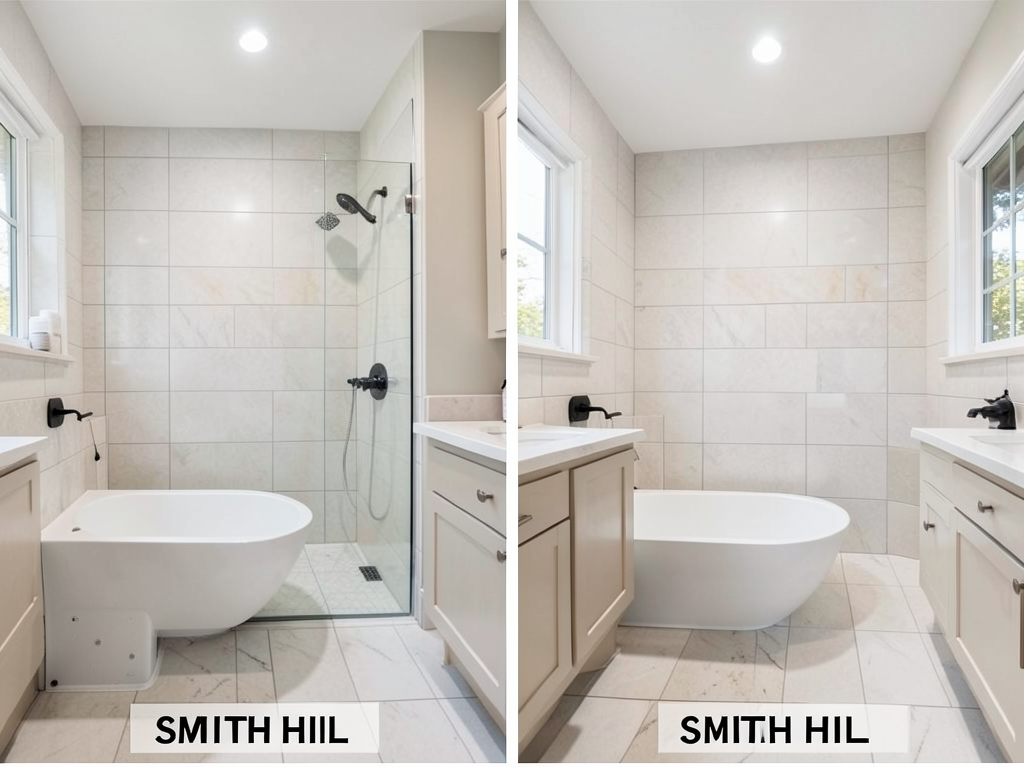
– Photo gallery showing before and after basement bathroom transformations in Smith Hill, including close-ups of ejector pump installations and finished bathrooms.
Making the Right Choice for Your Smith Hill Home
Deciding between an upflushing system and a gravity drain system depends on several factors specific to your Smith Hill basement. Consider your budget, intended use, and the condition of your existing plumbing when making this decision.
Upflushing systems work well for occasional use or as a guest bathroom. They’re ideal if you want to avoid demolition or have budget constraints. However, they may not be suitable for families who will use the bathroom daily or for rental properties where reliability is crucial.
Gravity drain systems with ejector pumps provide more reliable performance for primary bathrooms. They handle higher volumes and are less prone to clogging than macerating systems. The main drawback is the higher upfront cost and the need to break through your basement floor.
Before making your final decision, we recommend a professional assessment of your basement. This includes checking your main sewer line condition, evaluating moisture levels, and measuring ceiling height and available space. We can then provide specific recommendations based on your home’s unique characteristics.
Remember that proper installation is crucial for basement bathroom longevity. Cutting corners or using inexperienced contractors can lead to expensive repairs down the road. Professional installation ensures your system meets all code requirements and includes proper warranties on both labor and materials.
Ready to Transform Your Smith Hill Basement?
Adding a bathroom to your Smith Hill basement is a significant investment that can dramatically improve your home’s functionality and value. The key to success is understanding the unique challenges of basement plumbing and working with professionals who have experience with Providence’s historic homes.
At Cornerstone Plumbing Providence, we specialize in basement bathroom installations throughout Smith Hill and the greater Providence area. Our team understands the specific requirements for historic home renovations and can guide you through every step of the process, from initial assessment to final inspection.
Don’t let plumbing challenges discourage you from creating the basement bathroom you’ve always wanted. With proper planning and expert installation, you can enjoy a beautiful, functional bathroom that adds both comfort and value to your Smith Hill home.
Call (401) 240-9711 today to schedule your basement bathroom consultation. We’ll assess your space, discuss your options, and provide a detailed quote with no hidden fees. Let us help you make your Smith Hill basement bathroom dreams a reality.
Frequently Asked Questions
How long does a basement bathroom installation take in Providence?
A typical basement bathroom installation takes 2 to 3 weeks from start to finish. This includes permit acquisition, which can add 2 to 4 weeks to the timeline. The actual construction work usually requires 7 to 10 working days, depending on the complexity of your chosen system.
Do I need a permit for a basement bathroom in Smith Hill?
Yes, you need a plumbing permit from the City of Providence Department of Inspections and Standards. The permit costs approximately $150 to $250 and requires detailed plumbing plans. We handle all permit applications as part of our installation services.
Can I install a basement bathroom without breaking concrete?
Yes, you can use an upflushing macerating toilet system that doesn’t require breaking concrete. These systems grind waste and pump it upward to the main drain line. However, they have limitations on usage and may not be suitable for primary bathrooms.
What’s the average cost for a basement bathroom in Providence?
Basement bathroom costs in Smith Hill range from $4,500 to $12,000 depending on the system chosen. Upflushing systems cost less upfront ($4,500 – $8,750) while gravity ejector systems cost more ($6,900 – $11,500) but offer better performance for primary bathrooms.
How do I prevent moisture problems in my basement bathroom?
Prevent moisture problems by installing proper ventilation with a humidistat-controlled exhaust fan, using moisture-resistant materials like porcelain tile and cement board, applying waterproofing membranes, and ensuring proper grading around your home’s exterior to direct water away from the foundation.
Will a basement bathroom add value to my Smith Hill home?
Yes, basement bathrooms typically add 60 to 70 percent of their cost in home value. In Smith Hill’s historic housing stock, additional bathrooms are highly valued and can make your home more attractive to potential buyers or renters.
You may also find this helpful. Choosing the Right Horsepower Garbage Disposal for Your Smith Hill Rental Property.
You may also find this helpful. Comparing the Best Sump Pump Brands for Mount Pleasant Basements.
{
“@context”: “https://schema.org”,
“@type”: “BlogPosting”,
“headline”: “Is Your Smith Hill Basement Ready for a Full Bathroom Addition?”,
“description”: “Adding a bathroom to your Smith Hill basement requires specific plumbing solutions. Learn about ejector pumps, Providence permits, and costs for Rhode Island homes.”,
“wordCount”: 2828,
“datePublished”: “2026-03-28T10:45:00.000Z”,
“dateModified”: “2026-03-28T10:45:00.000Z”,
“inLanguage”: “en-US”,
“mainEntityOfPage”: {
“@type”: “WebPage”,
“@id”: “https://cornerstoneplumbingprovidence.com”
},
“publisher”: {
“@type”: “LocalBusiness”,
“name”: “Cornerstone Plumbing Providence”,
“url”: “https://cornerstoneplumbingprovidence.com”
},
“author”: {
“@type”: “Organization”,
“name”: “Cornerstone Plumbing Providence”,
“url”: “https://cornerstoneplumbingprovidence.com”
},
“image”: {
“@type”: “ImageObject”,
“url”: “https://cornerstoneplumbingprovidence.com/wp-content/uploads/2026/03/is-your-smith-hill-basement-ready-for-a-full-bathr-1.png”
}
}
{
“@context”: “https://schema.org”,
“@type”: “Plumber”,
“name”: “Cornerstone Plumbing Providence”,
“url”: “https://cornerstoneplumbingprovidence.com”,
“address”: {
“@type”: “PostalAddress”,
“addressLocality”: “Providence”
},
“areaServed”: {
“@type”: “City”,
“name”: “Providence”
}
}
{
“@context”: “https://schema.org”,
“@type”: “FAQPage”,
“mainEntity”: [
{
“@type”: “Question”,
“name”: “Ready to Transform Your Smith Hill Basement?”,
“acceptedAnswer”: {
“@type”: “Answer”,
“text”: “Adding a bathroom to your Smith Hill basement is a significant investment that can dramatically improve your home’s functionality and value. The key to success is understanding the unique challenges of basement plumbing and working with professionals who have experience with Providence’s historic homes.”
}
},
{
“@type”: “Question”,
“name”: “How long does a basement bathroom installation take in Providence?”,
“acceptedAnswer”: {
“@type”: “Answer”,
“text”: “A typical basement bathroom installation takes 2 to 3 weeks from start to finish. This includes permit acquisition, which can add 2 to 4 weeks to the timeline. The actual construction work usually requires 7 to 10 working days, depending on the complexity of your chosen system.”
}
},
{
“@type”: “Question”,
“name”: “Do I need a permit for a basement bathroom in Smith Hill?”,
“acceptedAnswer”: {
“@type”: “Answer”,
“text”: “Yes, you need a plumbing permit from the City of Providence Department of Inspections and Standards. The permit costs approximately $150 to $250 and requires detailed plumbing plans. We handle all permit applications as part of our installation services.”
}
},
{
“@type”: “Question”,
“name”: “Can I install a basement bathroom without breaking concrete?”,
“acceptedAnswer”: {
“@type”: “Answer”,
“text”: “Yes, you can use an upflushing macerating toilet system that doesn’t require breaking concrete. These systems grind waste and pump it upward to the main drain line. However, they have limitations on usage and may not be suitable for primary bathrooms.”
}
},
{
“@type”: “Question”,
“name”: “What’s the average cost for a basement bathroom in Providence?”,
“acceptedAnswer”: {
“@type”: “Answer”,
“text”: “Basement bathroom costs in Smith Hill range from $4,500 to $12,000 depending on the system chosen. Upflushing systems cost less upfront ($4,500 – $8,750) while gravity ejector systems cost more ($6,900 – $11,500) but offer better performance for primary bathrooms.”
}
},
{
“@type”: “Question”,
“name”: “How do I prevent moisture problems in my basement bathroom?”,
“acceptedAnswer”: {
“@type”: “Answer”,
“text”: “Prevent moisture problems by installing proper ventilation with a humidistat-controlled exhaust fan, using moisture-resistant materials like porcelain tile and cement board, applying waterproofing membranes, and ensuring proper grading around your home’s exterior to direct water away from the foundation.”
}
},
{
“@type”: “Question”,
“name”: “Will a basement bathroom add value to my Smith Hill home?”,
“acceptedAnswer”: {
“@type”: “Answer”,
“text”: “Yes, basement bathrooms typically add 60 to 70 percent of their cost in home value. In Smith Hill’s historic housing stock, additional bathrooms are highly valued and can make your home more attractive to potential buyers or renters.”
}
}
]
}
{
“@context”: “https://schema.org”,
“@type”: “HowTo”,
“name”: “Basement Bathroom Installation Process”,
“step”: [
{
“@type”: “HowToStep”,
“position”: 1,
“name”: “Initial Assessment and Planning”,
“text”: “We evaluate your basement layout, existing plumbing, and structural conditions. This includes camera inspection of your main sewer line and moisture testing of basement walls.”
},
{
“@type”: “HowToStep”,
“position”: 2,
“name”: “Permit Acquisition”,
“text”: “We handle all permit applications with the City of Providence, ensuring your plans meet local code requirements before work begins.”
},
{
“@type”: “HowToStep”,
“position”: 3,
“name”: “System Selection and Design”,
“text”: “Based on your budget and usage needs, we recommend either an upflushing or ejector pump system and create detailed installation plans.”
},
{
“@type”: “HowToStep”,
“position”: 4,
“name”: “Demolition and Preparation”,
“text”: “For ejector systems, we carefully break through the concrete floor, remove soil to proper depth, and prepare the sump basin area.”
},
{
“@type”: “HowToStep”,
“position”: 5,
“name”: “Plumbing Rough-in”,
“text”: “We install all drain lines, vent pipes, and water supply lines according to code. For ejector systems, we set the pump basin and connect it to the main sewer line.”
},
{
“@type”: “HowToStep”,
“position”: 6,
“name”: “Electrical and Ventilation”,
“text”: “We install dedicated circuits for pumps, GFCI outlets, and bathroom exhaust fans with proper ducting to the exterior.”
},
{
“@type”: “HowToStep”,
“position”: 7,
“name”: “Fixture Installation”,
“text”: “We set the toilet, sink, and shower, connecting all fixtures to the new plumbing system.\nInspection and TestingWe schedule required inspections and thoroughly test all systems, checking for leaks and proper pump operation.”
},
{
“@type”: “HowToStep”,
“position”: 8,
“name”: “Final Finishes”,
“text”: “We coordinate with your finishing contractor for wall installation, flooring, and final fixture connections.”
}
],
“image”: “https://cornerstoneplumbingprovidence.com/wp-content/uploads/2026/03/is-your-smith-hill-basement-ready-for-a-full-bathr-1.png”
}
{
“@context”: “https://schema.org”,
“@type”: “BreadcrumbList”,
“itemListElement”: [
{
“@type”: “ListItem”,
“position”: 1,
“name”: “Home”,
“item”: “https://cornerstoneplumbingprovidence.com”
},
{
“@type”: “ListItem”,
“position”: 2,
“name”: “Blog”,
“item”: “https://cornerstoneplumbingprovidence.com/blog”
},
{
“@type”: “ListItem”,
“position”: 3,
“name”: “Is Your Smith Hill Basement Ready for a Full Bathroom Addition?”
}
]
}
{
“@context”: “https://schema.org”,
“@type”: “Service”,
“serviceType”: “Plumbing”,
“provider”: {
“@type”: “LocalBusiness”,
“name”: “Cornerstone Plumbing Providence”,
“url”: “https://cornerstoneplumbingprovidence.com”
},
“areaServed”: {
“@type”: “City”,
“name”: “Providence”
},
“description”: “Adding a bathroom to your Smith Hill basement requires specific plumbing solutions. Learn about ejector pumps, Providence permits, and costs for Rhode Island homes.”
}